• Is comparison the thief of joy?

    Jun 13th, 2023

    When I was ten, I had an English lesson on comparative words at school – words like ‘more’, ‘better’, and ‘best’. I remember sitting at my desk and wondering what I was ‘the best at’. I went home that day and asked my mum if I could ever claim such a title. She replied that there are billions of people in the world which makes it both impossible to measure and to achieve. She said all any of us can do is try our best. It didn’t stop me dreaming of becoming the best singer there ever was, but I respected her words and tried to remember them.

    Not so easy when you’re an adult. Societal pressure to consistently meet certain standards and tick particular boxes by arbitrary deadlines can make everything feel like a perpetual competition.

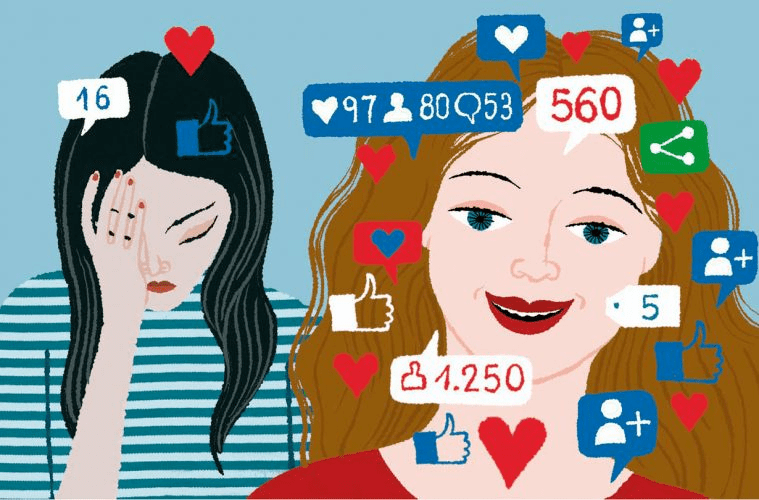
    We’ve all fallen victim to a comparative mentality, particularly of late, given the staggering rise of social media. Looked in the mirror and resented our reflection. Felt a pang of jealousy when a colleague gets promoted above us. Cursed what we have or what we are because it would appear someone else’s life is an overall better success story.

    But, as hard as it might be to break the habit, I’m going to tell you why comparing yourself to others is not only futile, but illogical and damaging to your self-esteem.
    You have plenty to offer

    It may be a cliche, but everyone – I repeat, everyone – has positive attributes that enrich their peers’ lives and the environment around them. And often the way those attributes are exhibited is unique to every individual. You’re not just funny: you have your own brand of humour that cannot be found in anyone else. You’re not just kind: you offer a certain type of comfort your friends can only find in you. You cannot ever be replaced. Now let’s see that main character energy.

    Psst! They’re jealous of you, too!

    The irony of all this is that while you’re busy envying the next person’s cheekbones or organizational skills, they’re envying your stunning smile or intelligence. You’re putting someone who isn’t perfect, who has insecurities just like you, who is human just like you, on a pedestal, for what? You assume life would be better in their shoes, but then you wouldn’t get to utilize the qualities you possess that they don’t! And despite advancements in AI we can’t combine all the qualities to create a new race of unstoppable superhumans just yet. Which is fortunate really… life would be pretty dull if that were the case as we’d all be the same!

    Isn’t competition healthy? I want to be successful

    You’re right on the money with this one. The only way to maximize one’s potential is to strive towards goals and not get complacent. And – hear me out – comparison is actually a good thing. But a far less damaging and much more productive alternative to comparing yourself to others is to compare yourself to… yourself! While comparing with others might show where you’re falling short and in turn give you motivation, you’ll ultimately feel discouraged, as someone will inevitably end up at the bottom. The yardstick should measure your progress from when you first started to where you are now. As Ernest Hemingway said: ‘There is nothing noble in being superior to your fellow men. True nobility lies in being superior to your former self.’ This is what you have the most control over, this is what you are the expert on, and this is what yields positive findings.

    Perfection is an illusion

    Let’s not forget, we actually have no idea what’s going on behind the scenes in other people’s realities; the wall of smiles on their Instagram is nothing but a collage of highlights. They have their own unique set of circumstances that involve privileges whether they’re economic, social, genetic, that we’ll never be privy to because all we see is the achievement itself. It’s better for your both your development and wellbeing to focus only on your truth, rather than letting theirs steal your joy.
  • Is AI unethical?

    Oct 4th, 2023

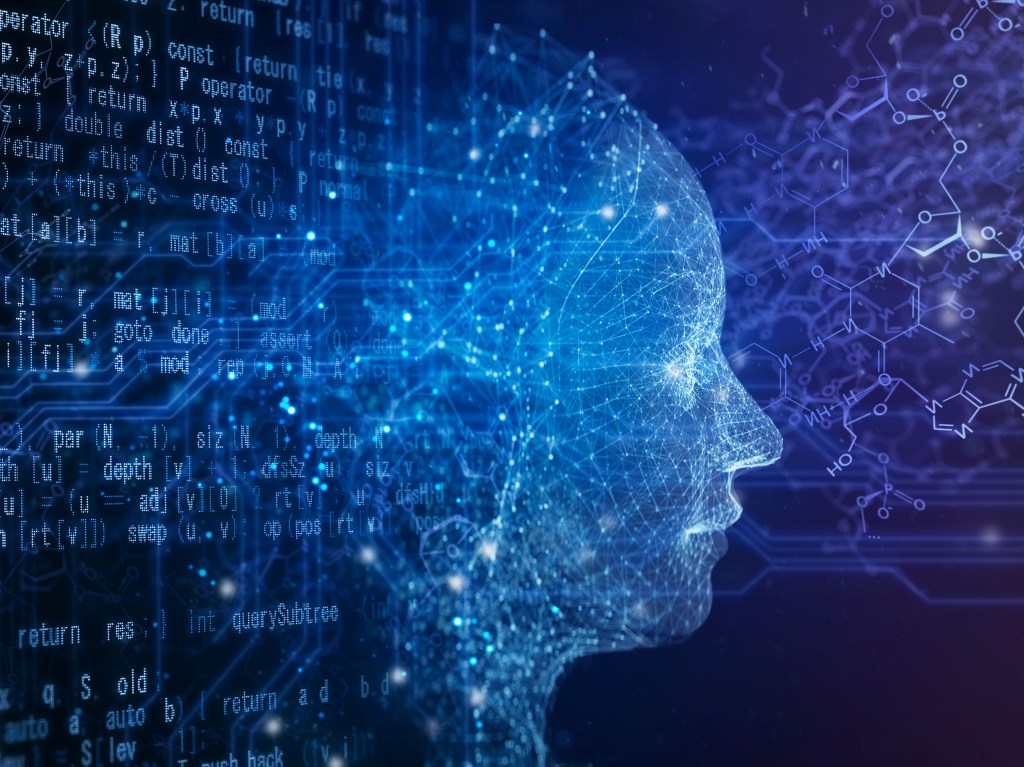
    With Artificial Intelligence dominating headlines, its role in society is becoming increasingly hard to ignore. There’s no doubt that it’s yielding revolutionary advances for the better, in the medical field and in fraud detection for instance. But having also seen the negative implications, should we scale it back? At what cost do we allow its influence to spread and expand, and what sort of net result can we expect to see in a generation’s time?

    The threat to creative industries

    The 2023 Writers Guild of America strike centred largely around concerns over ‘generative AI’. Media companies are conducting various experiments with this to produce text content which, if successful, could put writers’ livelihoods in jeopardy. Not only is this a devastating prospect for creatives on a personal level, but begs challenging questions:

    Can AI authentically replicate humans? It doesn’t encompass emotional intelligence, and I’d argue that as long as this is the case, its creations can never be classified as art. And when has a replication of anything ever measured up to the real thing?

    What does art mean to us? Even if it could match humans, what would developing a complete indifference to the notion of AI generated art superseding traditional art say about us as a society? It’s one thing for Alexa to play Magic Radio on command and it’s another for organic emotions, experiences and expression to become indistinguishable from a computer.

    Of course, some may argue that in content creation it’s simply a tool devised to churn out more material – a business strategy – and that aside from job loss for a small fraction of the population, there is no great disadvantage.

    I would argue that while on a minor level it might not seem a terrible thing, devaluing human-made art could be the first step towards devaluing humans. After all, through all of history’s monstrosities, through all the government’s failings, through all our trials and tribulations, creating and engaging with art is what unites us, comforts us, stabilizes us, keeps us sane. Art is something that we, not computers, have always been able to take great pride in. Losing that pride, the thing that has separated us from technology, could exacerbate the distress felt by so many in these uncertain times.

    While it’s not technically cheating (provided there’s some sort of disclaimer pertaining to the use of AI) it certainly feels like the gift and wonder of art, and what it means to be human, is being cheapened.

    Artistic identity theft

    However, author Joyce Maynard recently discovered that she had been deceived on a monumental level. An article in The Atlantic revealed that her work had been illegally scanned in order to feed an AI database in such a way that her novels could be replicated without her permission. She is taking legal action through The Authors’ Guild, but is there a loophole somewhere that will not only allow those behind the database to get away scot-free, but for this practice to take off and, again, threaten the livelihoods of real writers? Unfortunately, it seems Sunak’s suggestion that artists should re-train and get new jobs may in fact become necessary. What power do we have as humans to stop or even control such a powerful force?

    Scams and agendas

    Many employers now feel the need to state within job adverts that the use of aids such as Chat GPT are not permitted within applications. While they often state that the use of these aids is easy to spot due to AI detection technology, the effectiveness of this technology varies, and by contrast AI technologies are becoming increasingly sophisticated. I’ve heard numerous first hand accounts of people duping others through Chat GPT and getting high essay marks, and the news has seen its fair share of deepfake stories.

    Deepfakes are synthetic media that, through digital manipulation, adopt the likeness of an individual. Unsurprisingly, despite the technology being in its infancy, we’ve already seen several examples of individuals being portrayed as saying, promoting or doing things that don’t represent them in the form of fake audio, photos or videos. In July, financial journalist and broadcaster Martin Lewis fell victim to this in an advert promoting a fake ‘Elon Musk investment’. Not only is the investment a scam, but Lewis was portrayed as its champion, making the incident a form of defamation. In May, a man from Long Island was arrested for superimposing the faces of women he knew onto images of other women’s naked bodies, and posting them online. Sadly, at the time of his arrest there was no law in place in New York State pertaining to this form of deepfaking, despite there having been a similar incident four years ago. He got six months.

    So where do we go from here as a society? Does AI have the potential for good? – of course, and we’ve seen it. But I, and I’m sure many others, would argue that the potential for harm is more relevant and perhaps far greater. We may see many more writers’ strikes. A few days ago this year’s strikes came to an end following an agreement to draw up a three-year contract that will include protection against AI that was non-existent before. There’s no denying that this is a victory. Let’s hope writers the world over – not just in Hollywood – don’t have to continuously resort to strikes the way NHS staff, teachers and rail workers have in the UK due to unfair treatment. Let’s hope we can collectively step back and see AI for what it is – an innovative tool to be monitored, modified and restrained, not one to be glorified.

1 2 3 … 6
Next Page→

Blog at WordPress.com.


Loading Comments...
 

    • Subscribe Subscribed
      • PORTFOLIO
      • Already have a WordPress.com account? Log in now.
      • PORTFOLIO
      • Subscribe Subscribed
      • Sign up
      • Log in
      • Report this content
      • View site in Reader
      • Manage subscriptions
      • Collapse this bar